Panel Discussion Review: Internationalization — Projects & New Offices Abroad
Most built environment firms approach internationalization as a business problem — taxes, entity structures, currency conversion. Antonio Rillosi, Lulu Lytle, and Yotam Kedem have all done it. They’ll tell you it’s a people problem first, a culture problem second, and a patience problem third.
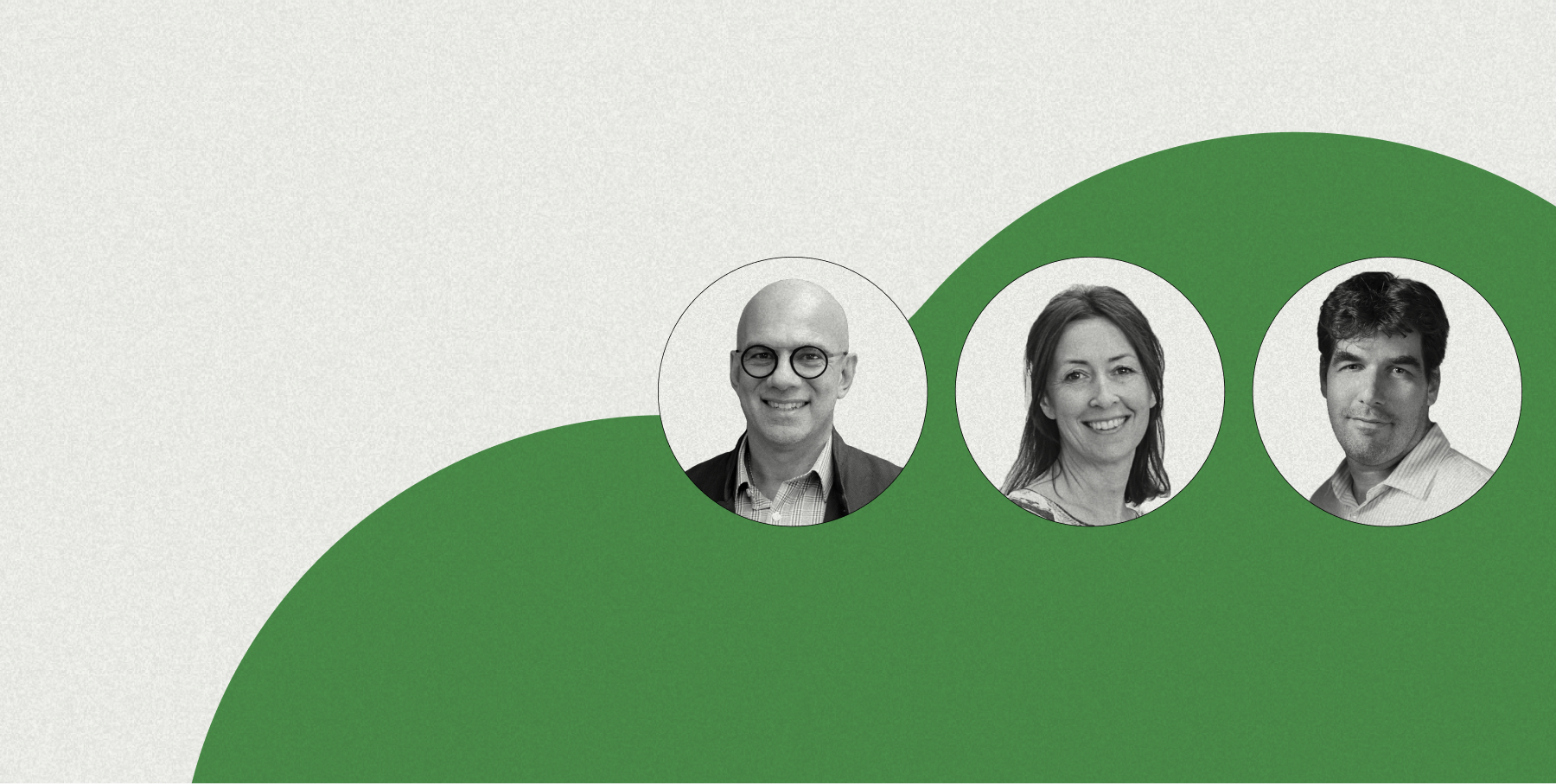
In a recent Brick & Wonder workshop, Rillosi — founder of Extravega, the Milan-based specialty fabricator with offices in New York, London, Dubai, and Sydney — joined Lytle, co-founder and creative director of Soane Britain, the London design house built around British craft manufacturing, and Kedem, who heads the New York office at Precise, a global financial management firm serving architecture and engineering practices. The conversation covered what no tax advisor can prepare you for: the identity loss, the delegation crisis, and the specific kind of trust required to hand your business to someone in a different time zone. Here are five things they shared.
On the fear of losing yourself in a new market
Expanding internationally exposes a fear that founders rarely name out loud: not that the business won’t grow, but that it won’t survive the crossing intact. For Lulu Lytle, this was the defining terror of opening Soane Britain’s first US showroom.
“I was nervous that what we stood for would be lost in translation. By then, the team in England was all having lunch together every day. We were living and breathing the whole business together.”
— Lulu Lytle, Soane Britain
The anxiety wasn’t unfounded. Soane Britain had spent decades building a very specific culture — one that required fluency in the skills of blacksmiths, fabric printers, and rattan weavers. How could a team in New York carry that?
Antonio Rillosi arrived at internationalization with an equally naive plan: move everyone. “My idea was to move everybody. We can go all together, we can buy several houses and we can live somewhere else. That was a wrong idea.” People had families. They had habits. The business plan had to be rebuilt from scratch.
On the person you trust with everything
All three panelists circled back, again and again, to the same thing: the success or failure of an international office lives or dies with one person. Not the strategy. Not the structure. The person.
“You are forced to give autonomy to that person you send there. A lot of the eggs are in that basket. You have to trust this person — not just to know the culture there or to do the work, but to be your eyes and ears. Your point guard on the court.”
— Yotam Kedem, Precise
Antonio Rillosi drew a useful distinction. The structure you build around systems is not the same thing as the structure you impose on the person you’ve most trusted. Over-structuring them signals distrust — the opposite of what you need. “If you create a very strong structure for him, that is exactly the opposite of trust.” The structure is for clients, suppliers, and other employees. Not for the person who’s there on your behalf.
On pace, culture, and the unwritten rules
Each panelist landed in a market that operated differently than expected. The surprises were rarely about language or logistics. They were about rhythm.
Lulu Lytle found that the American pace — which exhausted her on overnight flights back to London — was actually a match for her personality. But the assumptions she’d made about what “different” would look like turned out to be wrong in ways that still surprised her. “We are divided by a common language. Things are still done very differently.” Her colleague in San Francisco, an Englishwoman who had adapted more quickly, put it plainly: “Lulu, you’ve just gotta get it out of your head that they do it like us here. They don’t. This is the way it’s done.”
Yotam Kedem had the opposite experience opening Precise’s London office. New York’s urgency read as aggression. “Coming from New York, they might look at you — you’re not polite enough, or too aggressive. And you really had to change how you deal with your staff.” Greece, where Precise also operates, sits at the other end of the scale entirely.
The common thread: every market runs at an unspoken pace, and the fatal error is trying to impose your home rhythm onto it.
On building credibility where nobody knows you
International reputation doesn’t transfer. References from London don’t close deals in New York the same way they would at home. Antonio Rillosi heard the same question hundreds of times in his early years in the US: “I understand that you did this, you did that. Fantastic. Can I see something similar here?”
The answer, at first, was no. He spent years doing smaller-than-ideal projects to prove the company could perform in the market. The shift came when he moved his family to New York — when clients could see he was taking the same bet he was asking them to take. “They saw I was taking the big leap of faith. And so — if you are taking it now, we can take it.” The project scale jumped fivefold almost immediately.
In Yotam Kedem’s experience, the challenge splits along a time horizon. Short-term, getting clients is the hard part. Long-term, it’s the team. “Once you establish yourself in the client sphere, you can really grow the business. And now it’s not just about getting one employee — it’s how do you grow the team. That becomes much more difficult.”
On knowing when to push forward — and when to stop
Not every market is worth the fight. The discipline of going international includes knowing how to read the difference between a slow start and a dead end.
Antonio Rillosi shut down Extravega’s Sydney operation. The market never opened to high-end fabrication work the way the US had — the jobs stayed small, and small wasn’t profitable. Dubai, by contrast, rewarded persistence: a Lamborghini showroom followed, then major residential commissions, then word of mouth from London architects bringing projects in from India.
Lulu Lytle’s approach: keep the long-term mission in view and don’t expand simply for the sake of growth. “We don’t just have to keep expanding for the sake of chasing growth. This is about a very long-term, considered plan of promoting British craftsmanship.”
Thank you to our workshop panelists:
Antonio Rillosi, CEO & Founder, Extravega
Lulu Lytle, Founder, Soane Britain
Yotam Kedam, Head of New York Office, Precise Financial Management
Watch the full workshop below: